AI voice recorders have moved far beyond simple dictation. They now summarize meetings, extract action items, and generate structured notes in seconds. But the trade-offs are shifting fast. Subscription costs, cloud dependencies, offline limits, and privacy policies vary sharply across products — and the differences matter more than the AI features themselves.
es.ai
Product-by-Product Breakdown
1. PLAUD Note / NotePin S / Note Pro
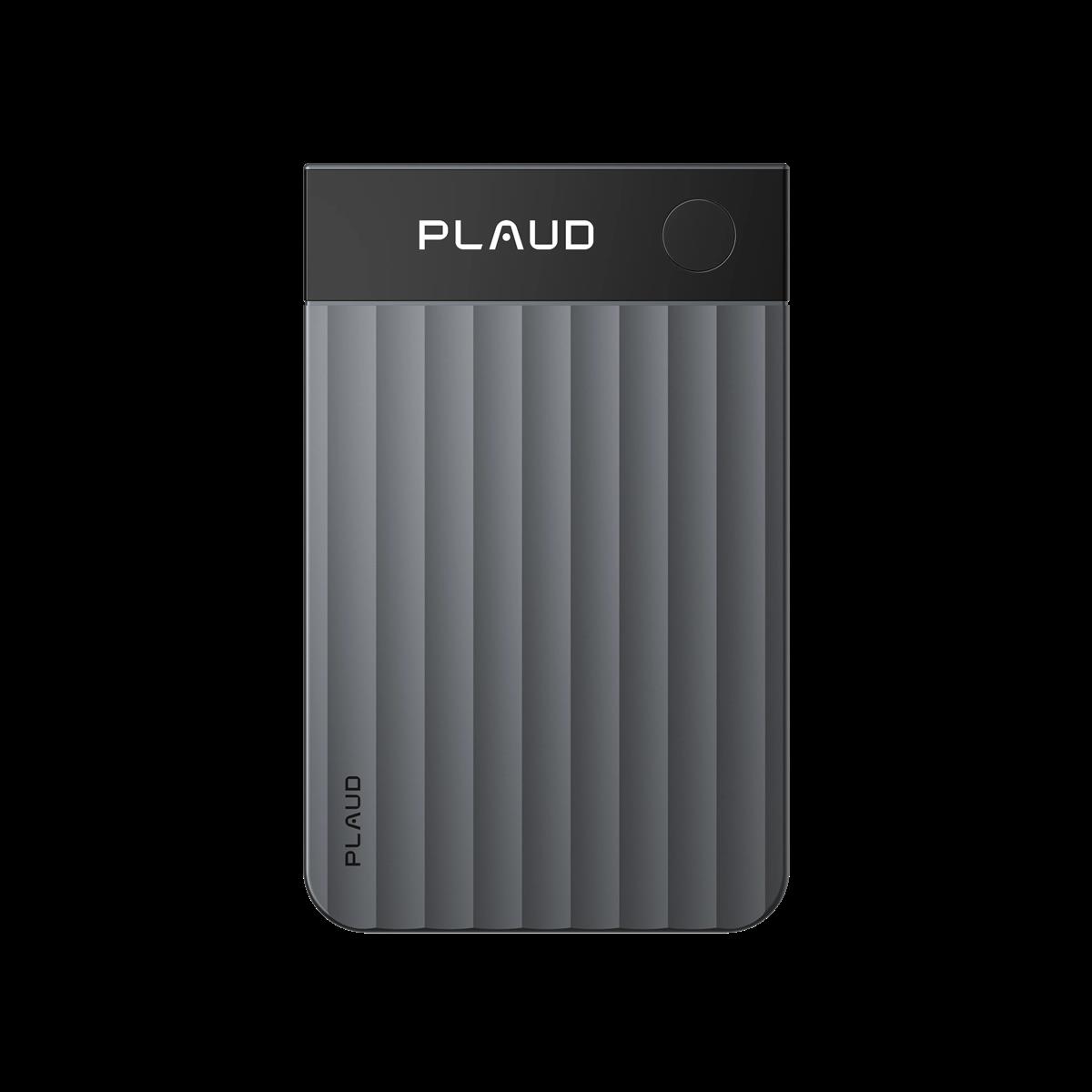
PLAUD is the only hardware-first product in this comparison. The Note, NotePin S, and Note Pro are physical recording devices that capture audio locally and store it on-device. Transcription requires uploading recordings to PLAUD’s cloud servers. PLAUD official site and PLAUD HK list the devices and plans.
- Free tier (Starter Plan): 300 minutes of transcription per month.
- Paid tiers: Pro plan at approximately $10–15/month; an Unlimited plan is available at a higher price point. Exact current pricing was not verifiable because the plaud.ai/privacy page returned a timeout during verification on July 23, 2026.
- Offline capture: YES. The device records locally and stores audio on internal memory. No internet connection is required to record.
- Offline transcription: NO. Audio must be uploaded to PLAUD’s cloud for AI processing. The on-device chip does not perform transcription.
- Export formats: TXT, PDF, DOCX, mind maps, and SRT subtitle files.
- Data location: Not explicitly disclosed on the public-facing pages. The company appears to operate infrastructure in the US and Singapore (implied by regional site structure), but this has not been confirmed in a published data-processing agreement accessible to the public.
- HIPAA compliance: In progress. PLAUD acquired StarJar, a compliance-focused entity, signaling intent to pursue HIPAA certification. This is not a completed certification as of the verification date.
- Software business: PLAUD reported software ARR exceeding $100 million as of June 2026 (per company disclosures).
plaud.ai/privacy was unreachable as of July 23, 2026. Data retention policies, deletion controls, and third-party data-sharing practices could not be independently confirmed from the public web. This is a significant gap for anyone evaluating PLAUD for regulated use cases.2. Otter.ai
Otter.ai is a well-established cloud transcription service with no hardware component. It records and transcribes through its mobile and web apps. Otter.ai pricing and Otter.ai privacy policy.
- Free tier: 300 minutes per month, with a 30-minute cap per individual meeting/recording.
- Pro plan: $16.99/month (or $8.33/month billed annually). 1,200 minutes per month, 90 minutes per meeting.
- Business plan: $30/month ($19.99/month billed annually). Unlimited transcription.
- Offline capture: NO. The app requires an active internet connection to record. There is no local-only recording mode.
- Offline transcription: NO. All transcription is performed in the cloud.
- Export formats: MP3 and TXT on the free tier; PDF, DOCX, and SRT on paid plans.
- Data location: AWS infrastructure in the United States. Third-party subprocessors include Amplitude (US-based analytics), AppsFlyer (Israel-based attribution), and Google (US-based cloud services).
- HIPAA: Available as an add-on (not included in the base plans).
- AI training: Otter.ai states that it trains AI models on “aggregated, de-identified audio.” This means your recordings may contribute to model training after identifiers are stripped. The privacy policy does not describe an opt-out mechanism for this use.
3. Fathom
Fathom is a meeting-focused AI notetaker that integrates with Zoom, Microsoft Teams, and Google Meet. It is not a general-purpose voice recorder. Fathom pricing and Fathom privacy policy.
- Free tier: Unlimited recordings and transcriptions. Generous compared to the field.
- Premium: $20/month ($16/month billed annually). Adds AI summaries, action items, and CRM integrations.
- Team: $19/user/month.
- Business: $34/user/month.
- Offline capture: NO. Fathom is a cloud-based meeting bot that joins your video calls. It cannot record without an internet connection.
- Offline transcription: NO.
- AI training: Fathom’s privacy policy explicitly states it does not authorize third parties to train AI models on user data. This is a notable distinction from Otter.ai’s approach.
- Data location: Not publicly disclosed in the privacy policy or pricing page.
- HIPAA: Not available.
- Deletion controls: The privacy policy describes user-accessible deletion mechanisms, though the specific retention period after deletion is not detailed.
4. Fireflies.ai
Fireflies.ai is a meeting transcription and summarization service with one of the strongest public security postures in this comparison. Fireflies pricing, Fireflies privacy policy, and Fireflies security page.
- Free tier: Unlimited transcription, with 400 minutes of storage.
- Pro: $10/seat/month (billed annually). 8,000 minutes of storage.
- Business: $19/seat/month (billed annually). Unlimited storage.
- Enterprise: $39/seat/month (billed annually). Adds HIPAA compliance, private storage, and custom data retention.
- Offline capture: NO. Cloud-based meeting bot.
- Offline transcription: NO.
- Data ownership: Fireflies states users own their data and the service does not train AI models on user data by default.
- Data retention with vendors: Fireflies has a 0-day data retention policy with third-party vendors — meaning vendors are not permitted to retain user data after processing is complete.
- Compliance: SOC 2 Type II certified, GDPR compliant, HIPAA available on the Enterprise plan.
- Data location: United States, with private storage options on the Enterprise plan.
5. Sembly AI
Sembly AI is a meeting intelligence platform with tiered plans that scale from individual use to large organizations. Sembly pricing and Sembly privacy policy.
- Basic: $10/month. 1 user, 5 hours of upload per month, 1 year of meeting history.
- Pro: $20/month. Up to 40 users, 10 hours of upload per month, 2 years of history.
- MAX: $30/month. Up to 500 users, 15 hours of upload per month, unlimited history, HIPAA compliance, and SSO.
- Offline capture: NO.
- Offline transcription: NO.
- Data location: United States data centers by default, with an EU option available.
- Compliance: SOC 2 audited. HIPAA available on the MAX plan.
- AI training: Sembly’s privacy policy does not prominently disclose whether user audio is used for model training. This is a gap that prospective users in regulated fields should clarify before adoption.
The Offline Illusion: Capture vs. Transcription
One of the most misunderstood features in AI voice recorders is the distinction between offline capture and offline transcription. Marketing language often conflates the two, but they are fundamentally different capabilities with different privacy implications.
- Offline capture means the device can record audio without an internet connection. The recording is stored on the device’s internal memory. This is useful for field recording, air travel, and any situation where connectivity is unreliable. PLAUD Note is the only product in this comparison that supports offline capture.
- Offline transcription means the AI model runs locally on the device, converting speech to text without sending audio to any remote server. As of July 2026, none of the five products reviewed here support offline transcription. All require audio to be uploaded to cloud infrastructure for processing.
This means that even with PLAUD’s hardware, your audio eventually leaves the device. The privacy guarantee is limited to the recording moment — once you want a transcript, the data goes to the cloud. For anyone working with sensitive interviews, protected health information, or confidential business discussions, this is a critical limitation to understand before purchasing.
Privacy Deep-Dive: Data Retention, AI Training, and Deletion Controls
Privacy policies are where the real differences between these products emerge. Below is a summary of what each company discloses about data handling, AI training, and user controls.
| Product | Trains AI on User Data? | Data Retention Policy | User Deletion Controls | Third-Party Subprocessors |
|---|---|---|---|---|
| PLAUD Note | Unknown (privacy page unreachable) | Unknown | Unknown | Unknown |
| Otter.ai | Yes — aggregated, de-identified audio | Not specified in detail | Account-level deletion available | Amplitude, AppsFlyer, Google |
| Fathom | No — does not authorize third parties to train on user data | Not specified in detail | User-accessible deletion | Not disclosed in detail |
| Fireflies.ai | No (by default) | 0-day vendor retention policy | User-accessible deletion | Disclosed; SOC 2 audited |
| Sembly AI | Not prominently disclosed | 1–2 years by plan tier; unlimited on MAX | User-accessible deletion | SOC 2 audited |
Fireflies.ai has the most transparent security posture among the five products, with SOC 2 Type II certification, a published 0-day vendor data retention policy, and an explicit statement that user data is not used for AI training by default. Otter.ai is the only product that explicitly confirms it uses aggregated, de-identified audio for AI model training — a practice that may be acceptable for general business use but is worth noting for anyone recording sensitive conversations.
Suitability by Workflow
Journalist / Field Reporter
Best fit: PLAUD Note
Offline capture is essential for field interviews where connectivity is unreliable. Export to DOCX and SRT supports editorial workflows. The privacy-policy gap is a concern for source protection — journalists should verify data handling directly with PLAUD before using the device for sensitive interviews.
Academic Researcher
Best fit: Fireflies.ai (Enterprise) or Sembly AI (MAX)
HIPAA-eligible plans, SOC 2 compliance, and clear data-ownership policies matter for IRB-approved research. Fireflies’ 0-day vendor retention and default no-training policy provide the strongest privacy guarantees in this comparison. Sembly’s EU data-center option is a plus for GDPR-governed research.
Clinician / Healthcare
Best fit: Fireflies.ai Enterprise or Sembly AI MAX
HIPAA compliance is non-negotiable. Fireflies Enterprise and Sembly MAX both offer HIPAA with BAAs. Otter.ai’s HIPAA add-on is also viable, but its AI training on de-identified audio may require additional due diligence. PLAUD is not HIPAA-certified as of the verification date. Fathom lacks HIPAA entirely.
Business Meetings (General)
Best fit: Fathom or Fireflies.ai
Fathom’s unlimited free tier is hard to beat for general business use, and its no-training policy is a clear differentiator. Fireflies offers more compliance depth at a competitive price. Otter.ai is a mature option but its AI training policy and per-meeting caps on lower tiers may be limiting.
Future Signal: PLAUD’s Hardware Ambitions
In June 2026, PLAUD was reported to be hiring baseband hardware engineers with 4G/5G cellular expertise, according to a Toutiao report. This job listing suggests the company is exploring AI earbuds with integrated eSIM connectivity — a device that could record and upload audio independently of a smartphone.
What this is: A hiring signal that indicates PLAUD’s R&D direction. Companies hire for expertise in areas they intend to build products in. Baseband engineers are specialists in cellular modem integration, which is consistent with a wearable audio device that connects directly to mobile networks.
What this is not: A confirmed product announcement. No specifications, pricing, release date, or even a product name have been published. The hiring pattern is a forward-looking indicator, not evidence of a shipping device. This information is included here as context for PLAUD’s strategic direction, and should not be cited as confirmation of an upcoming product.
Price-Per-Minute: The Hidden Cost of “Free”
A free tier with 300 minutes of transcription per month may sound generous, but the math changes quickly for heavy users. Below is the effective annual cost for a single user at each product’s most comparable paid tier, excluding hardware.
| Product | Paid Tier (Annual) | Annual Cost | Monthly Minutes | Cost per 100 Minutes |
|---|---|---|---|---|
| Otter.ai Pro | $8.33/mo | $99.96 | 1,200 | ~$0.69 |
| Fathom Premium | $16/mo | $192.00 | Unlimited | $0.00 (marginal) |
| Fireflies Pro | $10/seat/mo | $120.00 | Unlimited transcription | $0.00 (marginal) |
| Sembly Basic | $10/mo | $120.00 | 5 hr upload | ~$0.33 |
| PLAUD Pro | ~$10–15/mo | ~$120–180 | Not verified | Unknown |
Note: PLAUD requires a hardware purchase ($159–$185) before any subscription. This up-front cost should be factored into total cost of ownership. PLAUD’s exact monthly minute allocation on the Pro plan and precise pricing could not be verified because the pricing and privacy pages were partially inaccessible at the time of verification.
Verification Note
This article was researched and written on July 23, 2026. All pricing, privacy claims, and feature descriptions were verified against the official sources listed below on the same date. Where a source was unreachable or a claim could not be verified, this is explicitly noted in the relevant section. No claims are based on inference, assumption, or second-hand reporting without a direct source link.
Verification status by product:
- Otter.ai: Fully verified (pricing, privacy) — pricing, privacy
- Fathom: Fully verified (pricing, privacy) — pricing, privacy
- Fireflies.ai: Fully verified (pricing, privacy, security) — pricing, privacy, security
- Sembly AI: Fully verified (pricing, privacy) — pricing, privacy
- PLAUD: Partially verified. Product pages and pricing accessible at plaud.ai and hk.plaud.ai. Privacy policy page (
plaud.ai/privacy) timed out and was unreachable. Future-product signal sourced from Toutiao.
Source List
- PLAUD official website — https://www.plaud.ai (accessed July 23, 2026)
- PLAUD Hong Kong — https://hk.plaud.ai (accessed July 23, 2026)
- PLAUD privacy policy — https://plaud.ai/privacy (attempted July 23, 2026 — unreachable, timed out)
- PLAUD hiring / future-product signal — https://m.toutiao.com/group/7665167636812153363/ (accessed July 23, 2026)
- Otter.ai pricing — https://otter.ai/pricing (accessed July 23, 2026)
- Otter.ai privacy policy — https://otter.ai/privacy (accessed July 23, 2026)
- Fathom pricing — https://fathom.video/pricing (accessed July 23, 2026)
- Fathom privacy policy — https://fathom.video/privacy (accessed July 23, 2026)
- Fireflies.ai pricing — https://fireflies.ai/pricing (accessed July 23, 2026)
- Fireflies.ai privacy policy — https://fireflies.ai/privacy (accessed July 23, 2026)
- Fireflies.ai security — https://fireflies.ai/security (accessed July 23, 2026)
- Sembly AI pricing — https://www.sembly.ai/pricing (accessed July 23, 2026)
- Sembly AI privacy policy — https://sembly.ai/privacy-policy (accessed July 23, 2026)
If you find an error or outdated information in this article, please refer to the official sources linked above for the most current pricing, features, and privacy terms.