
Evidence status: facts checked on 5 November 2026 against a B2B platform buyer wiki and a consumer-community test roundup — the latter small-sample community tests, not laboratory trials. This is an editorial documentation note, not legal advice and not a claim about any seller’s stock.
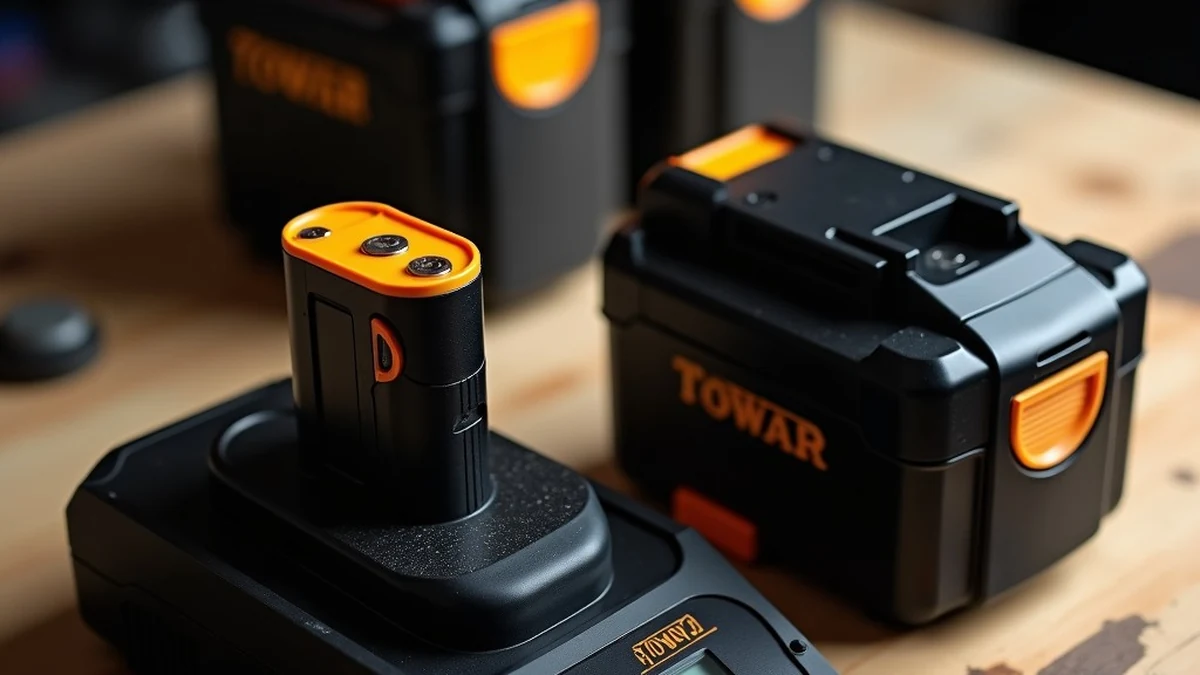
Three failure patterns in low-price packs
Trade and community write-ups describe three recurring gaps in cheap lithium packs for cordless tools. Cell capacity first: packs labelled 2000 mAh have measured around the 1400 mAh class in small-sample community tests — a screening signal, not a certified figure. Charging second: advertised fast-charge power is often a protocol ceiling the pack cannot hold, so wall-clock charge times disappoint. Protection third: the battery management board may be a minimum design that trips late or not at all. The 1688 buyer wiki on power tools frames these as the main reasons two visually similar packs diverge in price.
One mould, many badges
The same pack housing is sold under many labels, and “German” brand names on such products are frequently rebranding rather than origin. The Russian retail market carries large volumes of no-name packs dressed in the visual language of major tool brands, so brand colour and mould shape are weak acceptance evidence. The community test roundup is a small-sample community tests source: treat its measurements as screening results to reproduce in your own acceptance, not as universal figures.
Acceptance before you reorder
Three checks separate a nominal from a real pack. Weigh it against the manufacturer’s official gram weight for the same capacity class — under-filled packs are usually light. Run one full discharge cycle on a capacity tester and compare delivered mAh with the label; one cycle is a screening test, not certification. Read the cell inkjet codes if a pack is opened for warranty reasons by a qualified technician, and record the cell maker and date code. Do not re-cell packs yourself: damaged lithium packs are a fire risk and belong to qualified service.
Editorial checklist
Put capacity, cell maker and net weight on the goods-receipt sheet per batch, keep one unopened pack per batch as a retention sample, and re-test when the supplier or the mould changes. This is an editorial procurement practice, not a safety certification.
Limits
We ran no discharge tests and bought no samples; the capacity differences quoted here come from small-sample community tests and a platform wiki and are not laboratory statistics. Nothing here diagnoses any specific pack, and no brand or channel is accused of misconduct. External links were checked on 5 November 2026.
For related sourcing notes, see the FYZSXNB intelligence desk.