
Evidence status: facts checked on 5 November 2026 against an open.kg report of 14 September 2026 on the EEC council session, plus two secondary trade sources — a Russian law-firm compliance note and a customs-broker explainer — both labelled below. This is an editorial documentation note, not legal advice and not a phytosanitary ruling on any consignment.
What the exemption covers, and its legibility condition
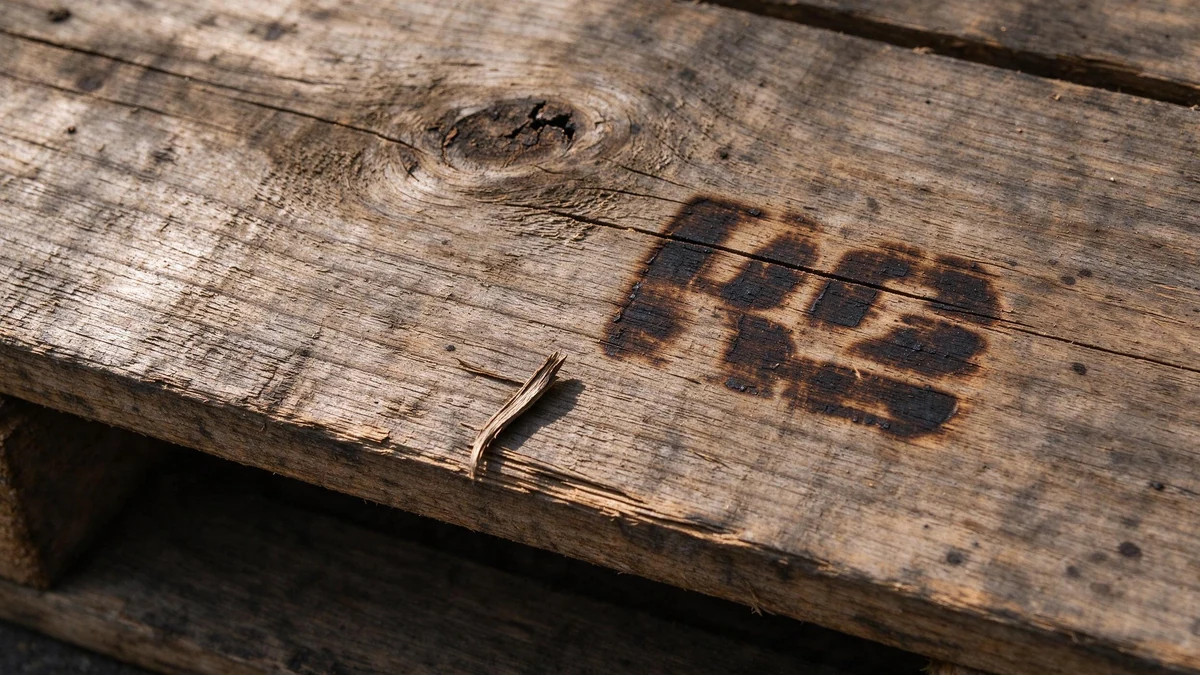
The EEC Commission approved a draft on 2 June 2026 and the EEC Council adopted the amendments on 9 September 2026: wood packaging, crates, dunnage and support timber carrying a compliant treatment mark (HT, MB and similar, ISPM-15 style) may enter the EAEU and move between member states without a phytosanitary certificate, as the open.kg report on the council session records. Previously even marked wood needed the certificate. The exemption is triggered by the mark, not by the material: it must be applied directly to the wood and clearly legible. Worn or painted-over marks and untreated scrap cut for makeshift wedges do not qualify, and the goods can be detained at the border — so a mark is not a release ticket. The amendment takes effect 30 calendar days after official publication; that publication page is not in our file, so no calendar date is given here. The same report notes the PepMV-free requirement for tomatoes, peppers and eggplants has been cancelled, while the phytosanitary certificate for those fruits remains required and seed and seedling rules are unchanged.
One missing mark, two articles of the Administrative Code
How the Russian customs office qualifies unmarked wood is disputed in the trade commentary, and the gap between the two candidate articles is roughly thirtyfold (law-firm reading, secondary interpretation). The law-firm compliance checklist sets out both: Administrative Code Article 10.2, a fine of 0.5–10 thousand roubles for a legal entity without confiscation, and Article 16.3, 50–300 thousand roubles with possible confiscation of the goods. Border customs is said to lean towards Article 16.3, but the article-qualification for the same fact pattern remains contested and is flagged here as unsettled. The same note lists pallets and dunnage under HS 4415 as high phytosanitary risk controlled products (citing Council Decision No. 77 of 24 September 2024) and points to an asymmetry: Russian imports follow Commission Decision 318, Russian exports follow Agriculture Ministry Order 440. A customs-broker explainer reads the same package in practical terms (trade-press reading).
Shipper-side packing checklist
- Photograph every HT/MB mark on cases, pallets and dunnage before the container doors close, and keep the photos with the packing list.
- Check the source of support timber and wedges; untreated cut-offs fail the mark test even when the pallets beside them are fine.
- On consolidated loads, check who shares the container: unmarked wood from another shipper is a detention risk you do not control.
- Confirm the direction of trade before quoting, because the import and export rulebooks differ.
Editorial recommendation
Write “only goods on legible HT/MB marked packaging and dunnage are accepted” into the packing specification, and make mark photographs a delivery document. This is an editorial procurement practice, not a customs procedure and not a promise about clearance.
Limits
We did not inspect any pallet, contact any customs office or verify any detention case; the fine ranges and article dispute come from secondary sources and remain unsettled. Entry into force is stated only as “30 calendar days after official publication” because the publication itself was not verified in this pass. External links were checked on 5 November 2026.
For related sourcing notes, see the FYZSXNB intelligence desk.