
Sources checked on 28 October 2026. This is procurement analysis, not clinical or regulatory advice.
The 94th autumn China International Medical Equipment Fair (CMEF) ran from 21 to 24 October at Beijing’s Capital International Exhibition Center, according to a Beijing municipal event listing. A 27 October report says the fair closed on 24 October and describes buyer-matching activity, including discussions about medical-device market entry in the Eurasian Economic Union. That coverage documents an event and its program; it does not validate any particular product, supplier, or registration.
For a buyer, the useful next step is not to turn a badge or meeting into a purchase order. It is to convert each promising conversation into a record that another colleague can check. Keep the model identity fixed throughout: a company may show several variants, and a brochure for one configuration does not automatically describe another.
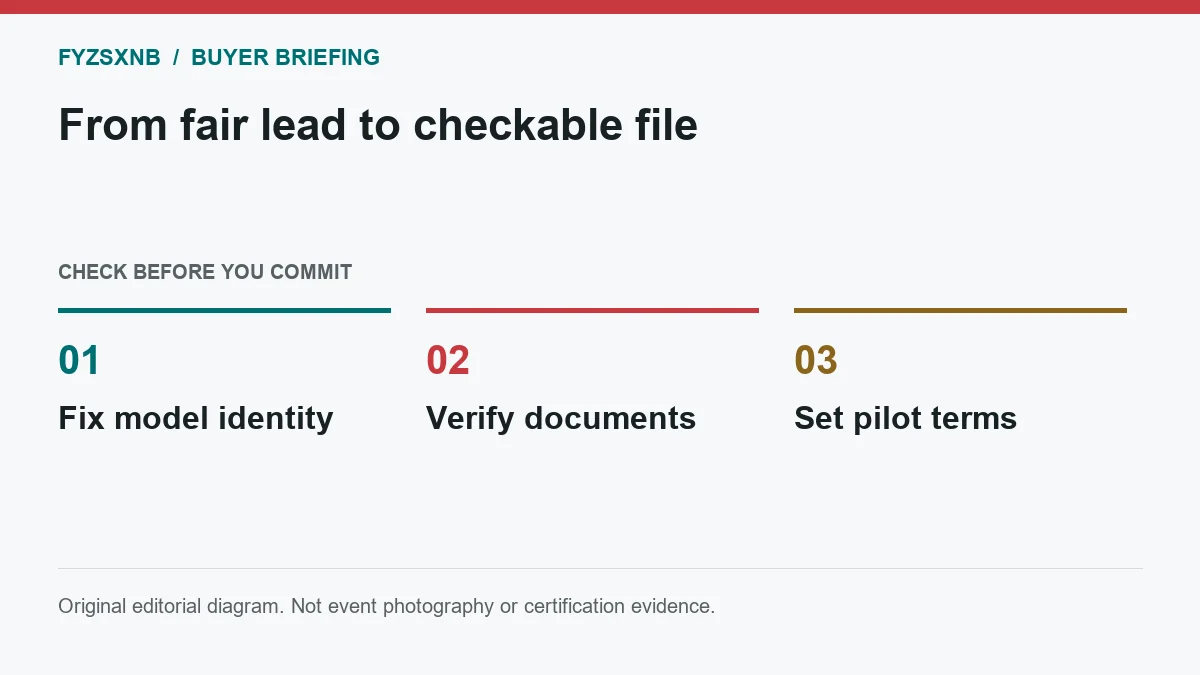
Build a model-specific file
- Identify the offer. Record the legal supplier name, exact model and REF, configuration, intended use as stated by the supplier, and the date and version of the materials received. Ask whether the quoted item is a finished device, a component, or a platform requiring additional parts or software.
- Request controlled documents. Ask for the current instructions for use (IFU), technical specifications, and any performance-study material that the supplier says applies to that exact model and intended use. Note language, revision date, and document owner. A study for a different model or use is not a substitute.
- Check regulatory status separately. If a supplier cites a registration or authorization, record the jurisdiction, identifier, holder, model scope, and issuing authority, then verify those details through the relevant official channel with a qualified reviewer. Exhibition presence and market-entry discussion are not evidence of authorization.
- Map operating dependencies. List consumables, compatible accessories, calibration or maintenance needs, software updates, training, service location, response arrangements, and who owns each obligation. Ask what happens if a critical consumable or repair is unavailable.
- Define a limited pilot. Agree in writing on sample configuration, acceptance criteria, responsibilities, records, and a stop/return path before scaling. Keep pilot observations distinct from clinical-performance evidence.
These are editorial procurement controls, not statutory requirements. They help expose gaps early, but cannot establish clinical suitability. Do not infer efficacy, safety, or authorization from a trade-show display, a matchmaking session, or a seller’s general presentation.
For a related document workflow, see our molecular POCT procurement guide. Buyers assessing a Russian IVD should also review our Russian-language guide to checking a Chinese IVD in the Russian registration registry; the product-specific status still needs its own verification.
Source record: Beijing municipal event listing, published for the October 2026 calendar, identifies the 21–24 October dates and venue. China Standardization magazine’s report, published 27 October, describes CMEF’s closure and buyer-matching activities. Checked 28 October 2026. No device was tested or independently evaluated for this article.