Recent product launches from Central Garden and Pet and Pet Honesty signal growing interest in lickable cat supplements. This article explains how owners should evaluate calming and nutrition claims in this category without relying on unverified marketing language.
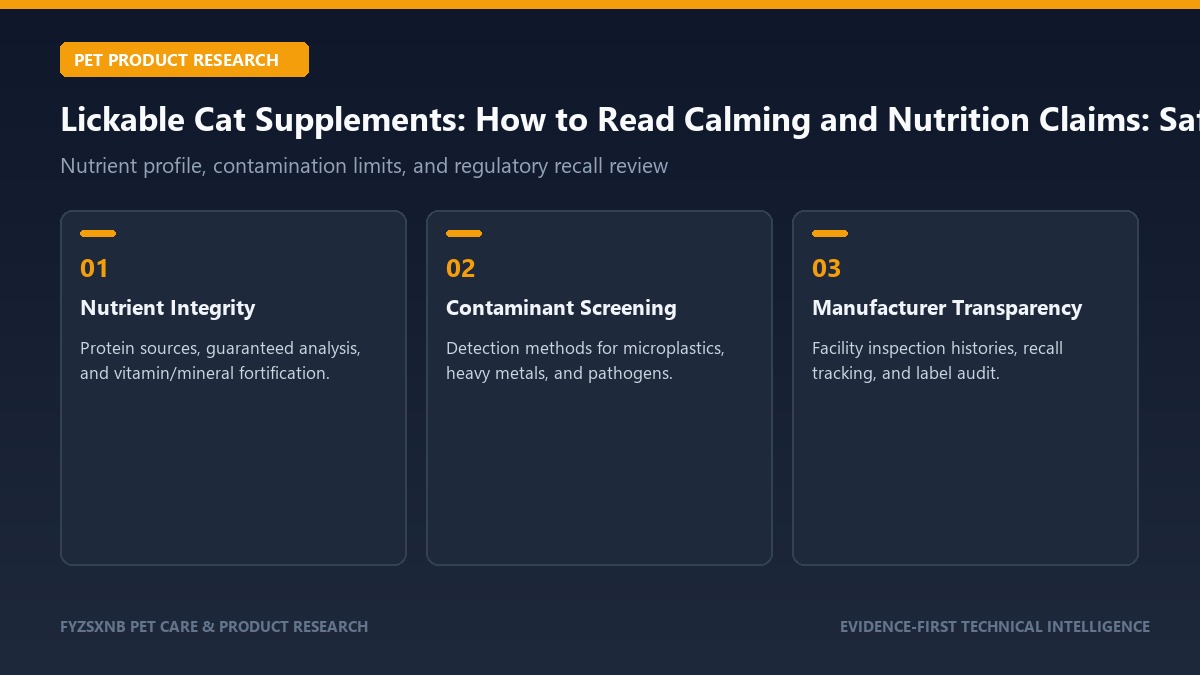
Lickable formats appeal to cat owners because they are easy to administer and often more palatable than traditional capsules. However, ease of use does not automatically mean efficacy. Owners need a framework for evaluating what these products actually claim versus what they can deliver.
How to Evaluate Calming Supplement Claims
Calming supplements for cats typically contain ingredients like L-theanine, tryptophan, valerian root, or casein hydrolysate. Before purchasing, owners should check whether the specific ingredient and dosage are listed on the product label.
| Claim Type | What to Look For on the Label | Red Flags |
|---|---|---|
| “Reduces stress” | Specific active ingredient and milligram amount per serving | Vague phrases like “proprietary blend” without dosage breakdown |
| “Supports relaxation” | Clinical study reference or NASC quality seal | Promises of immediate sedation or behavioral cure |
| “Veterinarian recommended” | Named veterinary association or specific endorser with credentials | Generic endorsement without attribution |
| “Natural calming” | Full ingredient list including inactive components | Use of “natural” as a primary selling point without ingredient transparency |
Do not select a product solely because of brand familiarity or packaging design. Verify that the calming claim is tied to a measurable ingredient at a disclosed concentration.
How to Evaluate Nutrition Supplement Claims
Nutrition-focused lickable supplements may claim to support skin, coat, joint, or immune health. These claims fall into different regulatory categories depending on jurisdiction. In the United States, the FDA and state regulators treat certain supplement claims as drug claims if they imply disease treatment.
| Nutrition Claim | Acceptable Evidence Level | Owner Action |
|---|---|---|
| “Supports healthy skin and coat” | Adequate; structure-function claim | Check for omega fatty acid content (EPA/DHA mg) |
| “Promotes joint health” | Adequate; structure-function claim | Verify glucosamine, chondroitin, or MSM dosage |
| “Prevents arthritis” | Unacceptable for supplements; drug claim | Avoid; consult a veterinarian for medical conditions |
| “Boosts immune system” | Borderline; requires careful wording | Look for specific nutrient names (zinc, vitamin E) and amounts |
If a product claims to treat, cure, or prevent a disease, it is operating outside supplement regulations. Report such claims to the FDA or your state feed control official.
Quality Signals Owners Should Verify
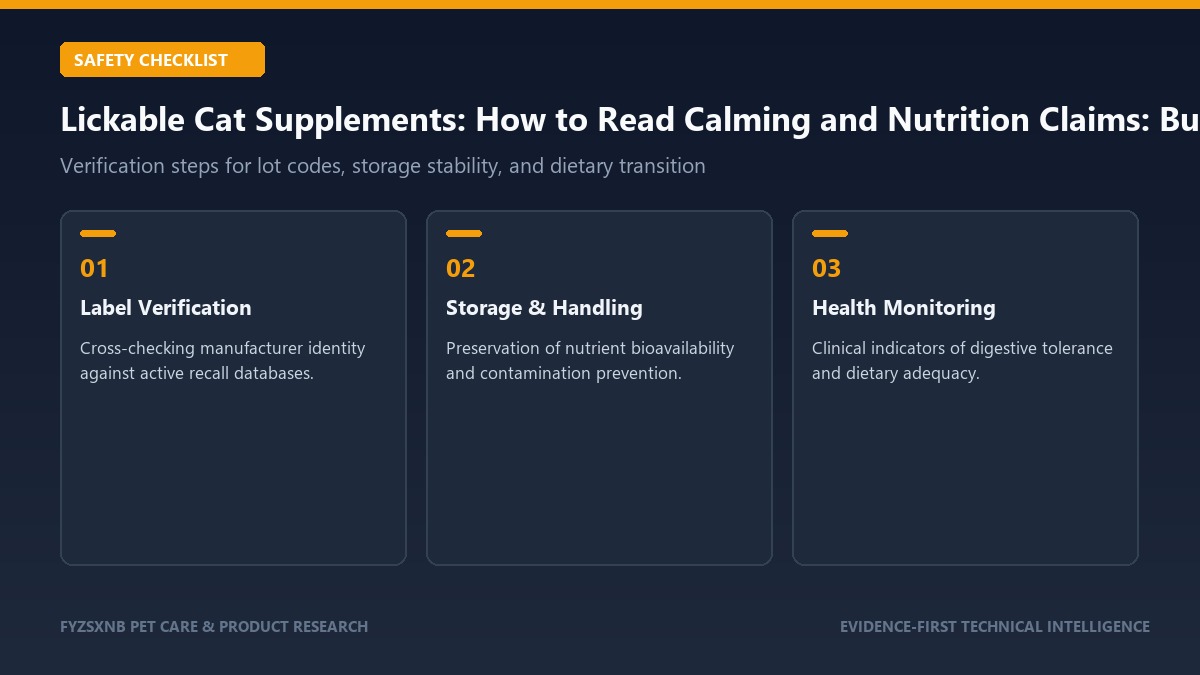
Third-party verification matters in the pet supplement industry because pre-market approval is not required for most products. Look for these quality indicators:
- NASC Quality Seal: Indicates the manufacturer follows quality standards for pet supplements and has passed an independent audit.
- Lot number and expiration date: Every container should have traceable manufacturing information.
- Complete ingredient list: Active and inactive ingredients must both be disclosed.
- Feeding directions by weight: Dosage should be specific to the cat’s size, not a one-size-fits-all recommendation.
- Contact information: The label should list a phone number or website for consumer inquiries.
Do not assume that a higher price indicates higher quality. Compare ingredient concentrations across products at similar price points to determine value.
When to Consult a Veterinary Nutritionist
Supplements can interact with medications or mask symptoms of underlying disease. Consult a veterinarian or board-certified veterinary nutritionist before adding supplements if your cat:
- Is currently taking prescription medication.
- Has a diagnosed medical condition such as kidney disease, hyperthyroidism, or diabetes.
- Is pregnant, nursing, or under six months of age.
- Has shown adverse reactions to dietary changes in the past.
A veterinary professional can review the ingredient list against your cat’s medical history and recommend whether a specific product is appropriate.
FAQ
Are lickable supplements better than pills?
They are often easier to administer, but bioavailability depends on the specific formulation. A lickable supplement with a low ingredient concentration may be less effective than a pill with a standardized dose. Compare active ingredient amounts, not just format.
Can I give my cat human supplements instead?
No. Many ingredients safe for humans are toxic to cats at different dosages. Xylitol, certain essential oils, and excess fat-soluble vitamins can be dangerous. Use only products formulated and labeled for cats.
How long should I wait to see results?
This varies by ingredient and claim. Calming supplements with L-theanine may show effects within hours, while coat or joint supplements often require four to eight weeks. If no change is visible after the expected period, consult your veterinarian rather than increasing the dose.
Does the NASC seal guarantee the product works?
No. The NASC seal indicates that the manufacturer follows quality and labeling standards. It does not verify clinical efficacy for every product. Use the seal as a baseline quality filter, then evaluate individual claims separately.
References and Sources
- Pet Food Processing. “Central Garden and Pet brand debuts lickable cat calming supplement.” https://www.petfoodprocessing.net/articles/20597-central-garden-and-pet-brand-debuts-lickable-cat-calming-supplement
- Pet Food Processing. “Pet Honesty launches lickable cat supplements.” https://www.petfoodprocessing.net/articles/20653-pet-honesty-launches-lickable-cat-supplements
- National Animal Supplement Council. “What is the NASC Quality Seal?” https://nasc.cc/quality-seal/
- American Veterinary Medical Association. “Pet supplements and nutritional products.” https://www.avma.org/resources-tools/avma-policies/pet-supplements-and-nutraceuticals
- Grand View Research. “Pet supplements market size and share report.” https://www.grandviewresearch.com/industry-analysis/pet-supplements-market