
Evidence status: facts checked against the JEDEC standard page, EUR-Lex regulation text and a supplier’s published change-policy page on 4 November 2026. Quoted-like details below are excerpts or supplier policy and are labelled as such. This is an editorial documentation note, not legal advice.
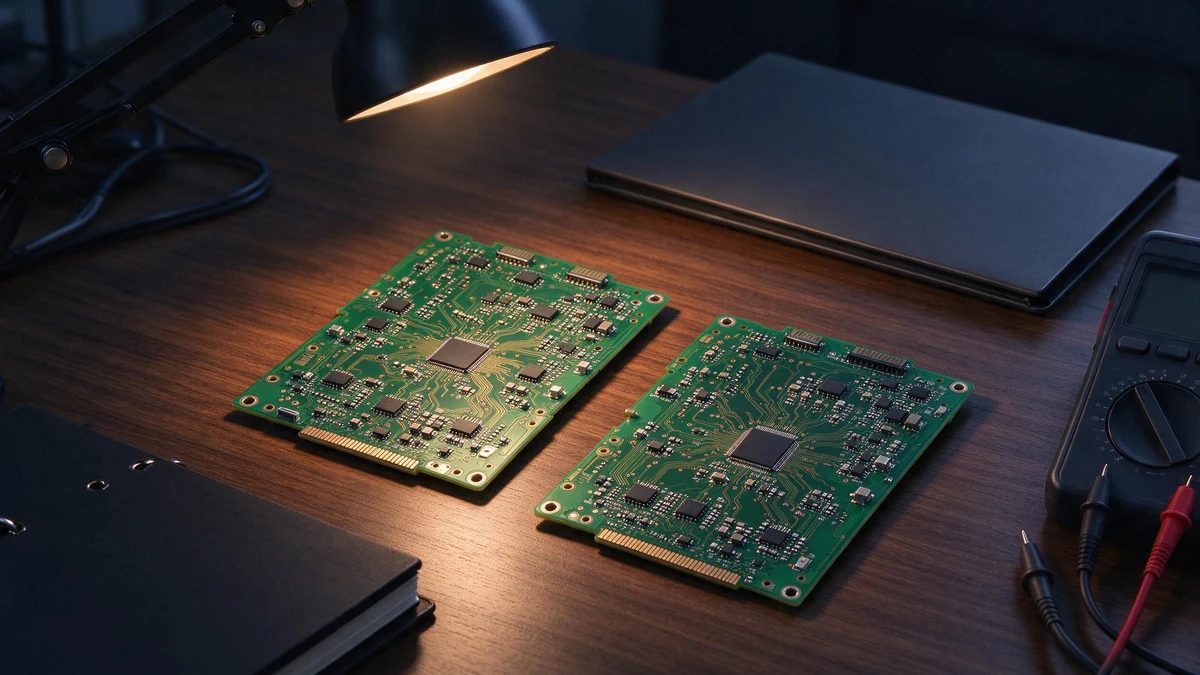
The clause has to be in the PO before the change happens
Product-change control only works if the purchase order asked for it first. The industry reference is JEDEC J-STD-046A, published December 2025 by committee JC-14, which sets out when manufacturers must notify customers about product and process changes. Two boundary details matter for a buyer drafting terms: the standard describes notification classes — changes needing customer approval, notification-only changes, and minor changes the supplier may not announce — and, as an excerpt of its scope, notification duties attach to customers who bought within the preceding two years and have change-notification requirements written into their contracts. A buyer who never wrote the requirement down may simply not be on the list.
Reading a PCN as a procurement document
When a product change notification arrives, it is a document to interrogate, not a memo to file. The fields worth recording: the change description and stated reason; the PCN tracking number; the affected part numbers and date-code ranges; the qualification plan or completed results behind the change; and the effective date. A useful pattern from a supplier’s published change-management policy — that vendor’s own commitment, not JEDEC text — is a notification lead time in working days, with a longer window for automotive lines. Treating the lead time as contractual, wherever you set it, is what turns a PCN from a surprise into a process.
The standards version printed on your EU declaration
For goods into the EU there is a second document that silently ages: the declaration of conformity. Under Regulation (EU) 2023/988 on general product safety, importers must verify that technical documentation exists, keep a copy, and see that it is updated when a product undergoes a substantial modification or when the standards it was tested against are revised — a summary of the importer duties rather than a verbatim citation. A supplier switching a component without telling you can invalidate the harmonised-standard citation on a declaration that still looks current, because the tested configuration and the shipped configuration are no longer the same.
Editorial recommendation — not an official obligation
Our suggestion is a standing PO clause: no BOM or component substitution without prior written approval and a PCN containing the five fields above, with qualification evidence attached. This is an editorial procurement practice, not a requirement of JEDEC or EU law on buyers.
Limits
We did not verify the full standard text, which requires purchase from JEDEC; scope details above are excerpts and summaries, labelled as such. Lead-time numbers are one supplier’s public policy and are not industry mandates. No statistics on PCN volume or substitution frequency are used. External links were checked on 4 November 2026.
For related sourcing notes, see the FYZSXNB intelligence desk.